
Canon camera buying guide
Canon EOS R6 Mark II vs R6 Mark III: upgrade or keep your kit?
A practical R6 Mark II vs R6 Mark III decision guide for photographers: what changes, what EF lenses you can keep with an adapter, and how to think about the upgrade cost.
By WannabeShepherd ·
If your R6 Mark II already serves you, price the whole change before upgrading
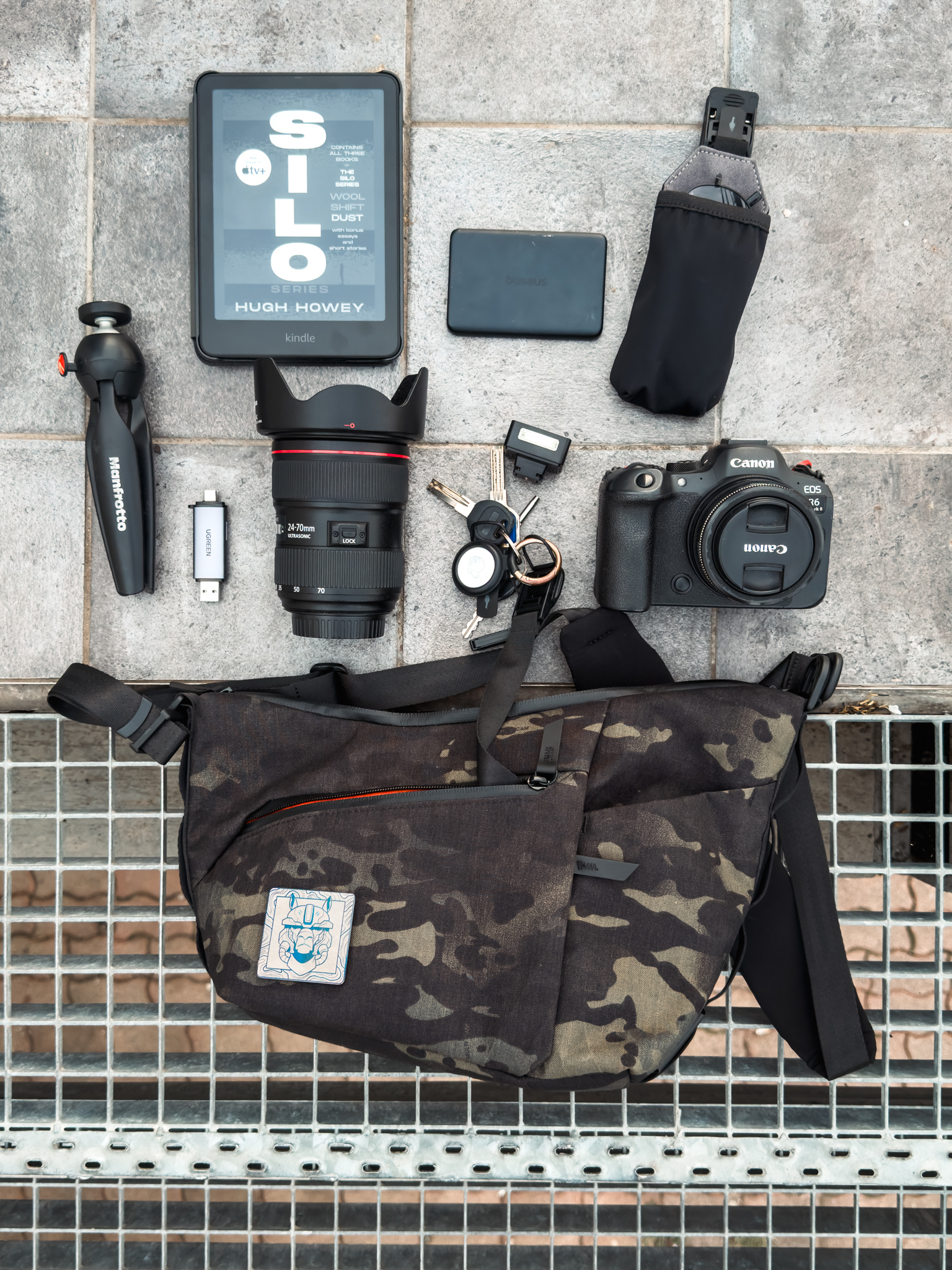
The R6 Mark III is a newer hybrid body, but the right decision depends on whether its particular improvements solve a problem in your photography or video work. I use the R6 Mark II and EF lenses. Canon says EF and EF-S lenses can be used on the R6 Mark III with the optional EF-EOS R mount adapter; that can preserve a lens investment, though compatibility is not the same thing as a first-hand test of every lens/body combination.
My direct experience is with an EOS R6 Mark II and EF lenses, including the EF 40mm f/2.8 STM and EF 24–70mm f/2.8L II. I have not tested the R6 Mark III. This is a buying decision guide based on Canon’s published information, not a side-by-side image-quality or autofocus test.
As an Amazon Associate I earn from qualifying purchases.
| Question | Stay with R6 Mark II if… | Consider R6 Mark III if… |
|---|---|---|
| Your current photos | Your stills workflow and keepers are already dependable | A named feature in the newer body solves a recurring limitation |
| Lens investment | Your EF lenses meet your needs and you already own the adapter | You want to expand, and have budgeted for adapter or RF glass where appropriate |
| Video | You rarely use the newer body’s video-focused capabilities | Your paid or personal video work benefits from the new capture options |
| Total cost | A body-only change crowds out lighting, travel or backup needs | The verified live body price leaves room for batteries, storage, adapter and lenses |
Make the upgrade earn its place
Avoid comparing camera bodies as a list of spec numbers. Write down what currently slows you down: missed focus, low-light limits, a video format you need, handling, media workflow, or a feature your paid work requires. Then check whether the R6 Mark III changes that point. If the answer is only “newer”, waiting and putting the money toward a lens, lighting or a trip may be the more useful choice.
I have used the R6 Mark II for product and street photography. That gives me a reference point for my own workflow, not a lab comparison with the Mark III. Canon’s announcement describes the new model as a hybrid camera; verify the exact video and photo features on Canon’s official product page before deciding which differences matter to you.
Do EF lenses force you to replace the whole kit?
No. Canon’s R6 Mark III manual says EF and EF-S lenses can be used with the optional Mount Adapter EF-EOS R; EF-M lenses are not supported. Canon also notes that EF-S lenses apply an approximately 1.6× crop. This gives existing EF owners a route to keep compatible glass when moving to RF mount, rather than treating a body purchase as an automatic all-new lens bill.
I use Canon EF 40mm f/2.8 STM and EF 24–70mm f/2.8L II lenses with an adapter on my R6 Mark II. That is my own kit context; I have not tested those specific lenses on the R6 Mark III. Before a paid shoot, check Canon compatibility guidance and test the exact body, adapter, lens firmware and features you rely on.
Budget the transition, not just the body
Build a simple total: camera body, adapter if needed, extra battery, memory cards suitable for your recording mode — see the R6 Mark III card guide for slot and speed-class requirements — storage for the larger files you will create, and any RF lens that solves a real gap. If buying a kit, compare the exact lens and package rather than assuming the photographed bundle is what the Amazon listing sells.
If you switch to an RF 24–70mm f/2.8L, treat it as a separate lens purchase decision. Compare the total system weight, use case, stabilization and cost with keeping your current EF zoom plus adapter. I have not benchmarked the EF and RF versions side by side, so I will not claim one is sharper or faster in my hands.
When an upgrade makes sense
A body upgrade is easier to justify when you can name a recurring limitation and the new feature removes it. It is harder to justify if your current camera already produces the images you need and the money would be better spent on reliable backup, batteries, lighting or a lens you use every week.
If the choice comes down to price, compare live body-only listings and reputable used options on the same day. Amazon search results may mix body-only, kit and marketplace sellers. Verify model number, seller, return window, warranty region and included accessories before ordering. As an Amazon Associate I earn from qualifying purchases.
Product specifications
Check the manufacturer's current product pages for the exact sold configuration; the untested models above are compared from these published details.
Common questions
Can I use EF lenses on the EOS R6 Mark III?
Canon’s manual says EF and EF-S lenses can be used with the optional EF-EOS R mount adapter. EF-M lenses are not supported; EF-S lenses use an approximately 1.6× crop.
Do EF lenses work exactly the same on every RF camera?
The mount adapter provides compatibility, but lens/body features can vary. Confirm the exact combination in Canon’s compatibility information and test the functions you rely on.
Should I replace EF lenses when buying an R6 Mark III?
Not automatically. Keep compatible lenses if they still fit your work, then consider RF replacements individually based on a real need and total cost.
As an Amazon Associate I earn from qualifying purchases.