
Canon RF telephoto guide
Canon RF100-400 vs RF75-300 on an EOS R6: which lens makes sense?
Compare the Canon RF75-300mm and RF100-400mm on an EOS R camera: reach, aperture, stabilization, autofocus, weight and the trade-offs that matter for wildlife and sports.
By WannabeShepherd · · Updated
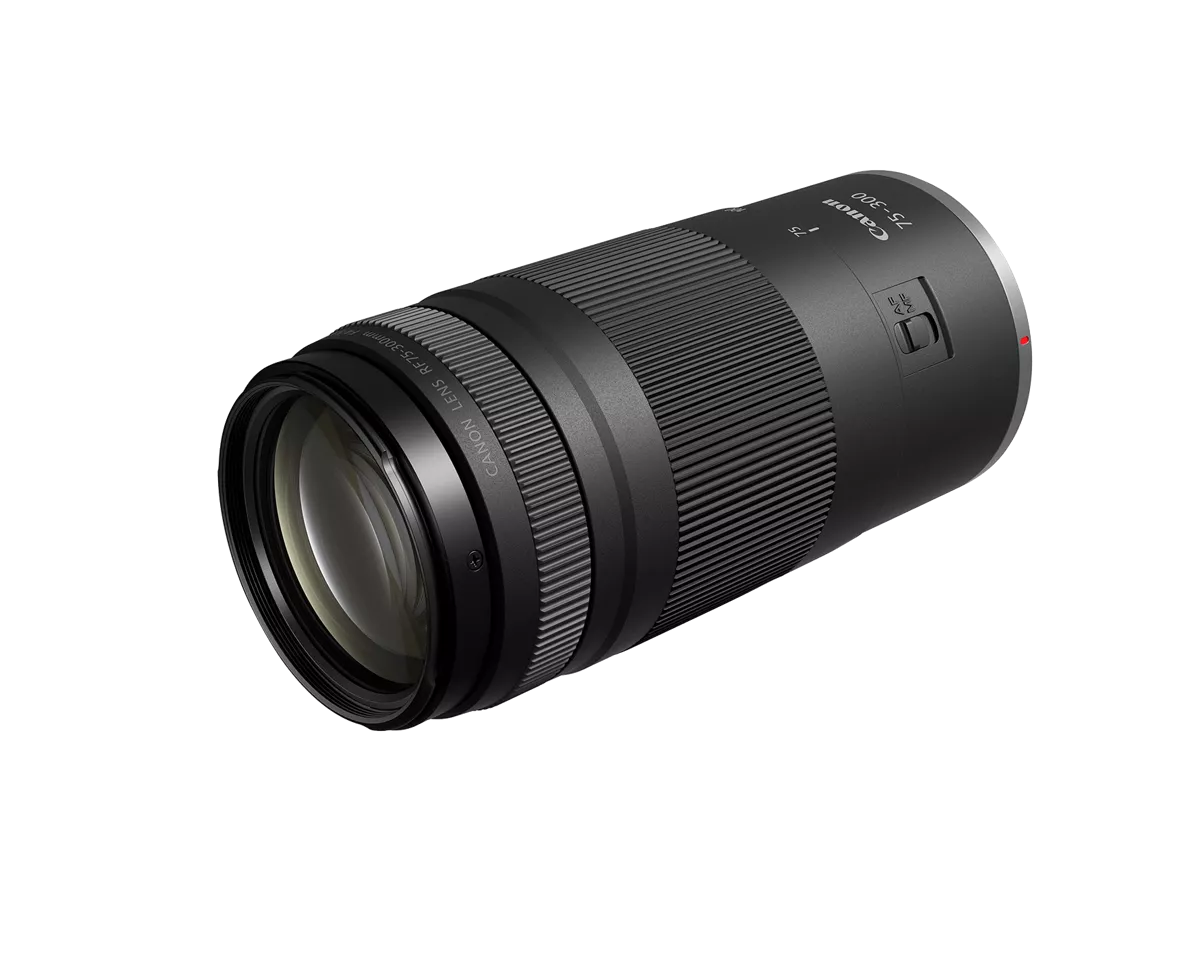
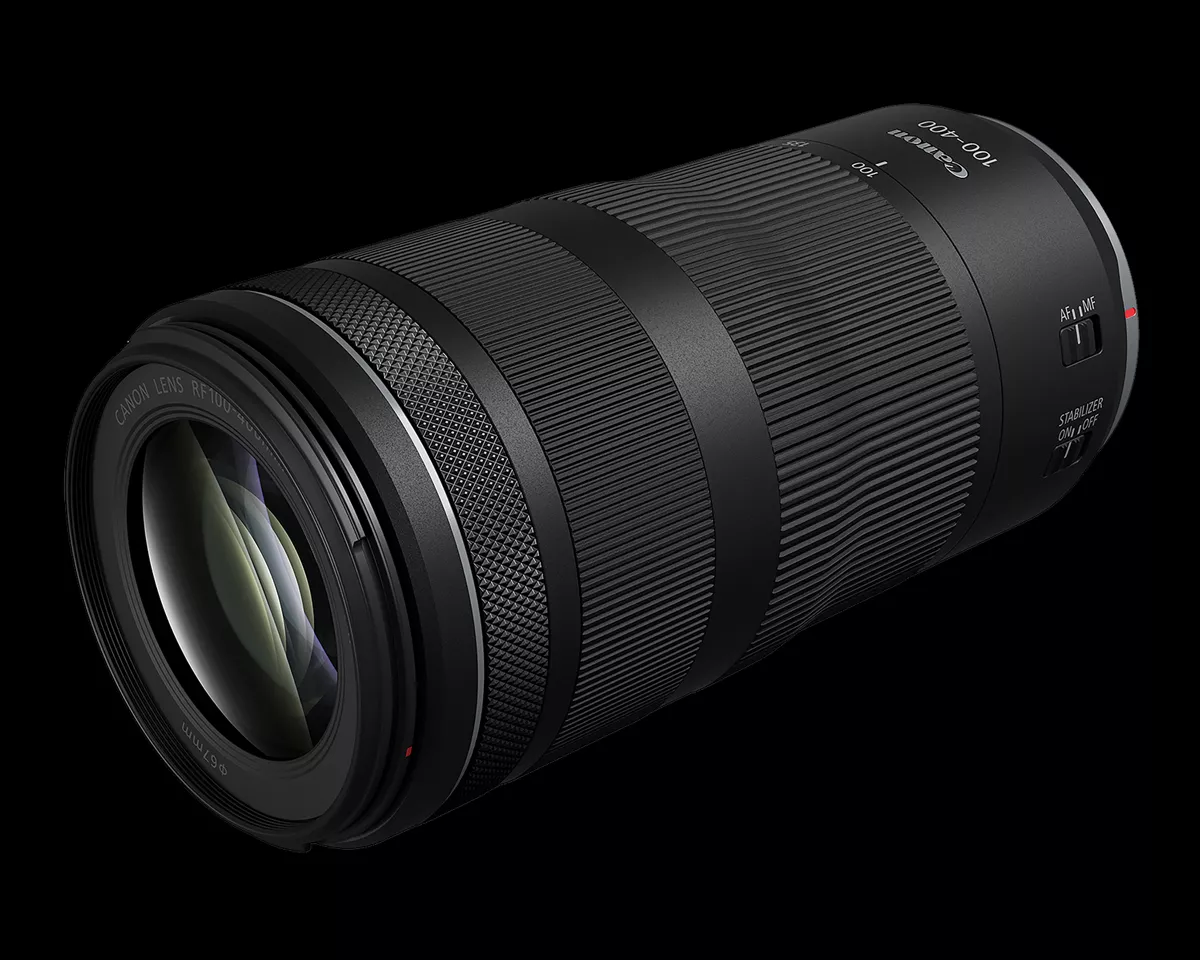
The RF100-400 is the more complete wildlife choice; the RF75-300 is the lower-cost daylight option
On a full-frame EOS R6, the RF75-300 gives you a wider 75mm starting point and a lighter, simpler zoom, but it has no optical image stabilization and stops at 300mm. The RF100-400 starts tighter, reaches 400mm, adds optical stabilization and Canon’s Nano USM focus drive, and weighs 635g. If you photograph active subjects in good light and can live with less reach, consider the 75-300. If you often want the extra reach, shoot handheld or expect to use the lens for video, the 100-400 has the stronger feature set. I have not hands-on tested either lens.
This is a manufacturer-specification comparison, not a hands-on review. I use a Canon EOS R6 Mark II and have tested EF lenses on it, but these two RF telephotos were not part of those tests. Canon’s stabilization figures are lab claims under its stated CIPA conditions; they do not guarantee a particular shutter speed or sharpness result with every EOS R body.
As an Amazon Associate I earn from qualifying purchases.
| Factor | RF75-300mm F4-5.6 | RF100-400mm F5.6-8 IS USM |
|---|---|---|
| Focal range | 75–300mm | 100–400mm |
| Maximum aperture | f/4 at 75mm; f/5.6 at 300mm | f/5.6 at 100mm; f/8 at 400mm |
| Optical lens stabilization | None | Up to 5.5 stops; Canon lists up to 6 stops coordinated with an EOS R body that has IBIS |
| Autofocus drive | DC motor, gear type | Nano USM |
| Weight | 507g | 635g |
| Weather-resistant construction | None | None |
| Lens hood | ET-60 sold separately | ET-74B sold separately |
On a full-frame R6, 75mm and 100mm feel meaningfully different
The RF75-300 begins at 75mm. That gives you more room for a nearby subject, a larger animal, or a sideline scene where you cannot step far back. The RF100-400 begins at 100mm, so it can feel tight when your subject is close or moving across the frame. Its advantage is the other end: 400mm gives more framing reach than 300mm without changing lenses.
Canon quotes a 120–480mm full-frame equivalent range for the RF75-300 on an APS-C EOS R body. That crop multiplier does not apply to the full-frame R6 Mark II: it remains a 75–300mm lens there. Think about where you stand and how much room you have before treating a higher maximum focal length as automatically better.
Stabilization helps with camera shake, not a moving subject
Canon lists no optical image stabilization for the RF75-300. The RF100-400 has lens IS rated up to 5.5 stops at 400mm, and Canon lists up to 6 stops of coordinated stabilization with an EOS R camera that has in-body IS. Those are standardized manufacturer figures, not a promise that every handheld photograph will be sharp.
Stabilization can make a static scene easier to photograph at a slower shutter speed. It cannot freeze a running dog, a bird taking off or a player sprinting across a field; those still need a shutter speed suited to the subject. If action is the main reason for this lens, prioritize aperture, shutter speed, autofocus behavior and where you can position yourself as well as IS.
The brighter 75-300 has a different compromise
The RF75-300 is rated f/4 at 75mm and f/5.6 at 300mm. The RF100-400 starts at f/5.6 at 100mm and reaches f/8 at 400mm. These maximum apertures occur at different zoom positions, so the table is a range comparison rather than a claim about identical focal lengths. In dim light, neither is a fast telephoto; expect to raise ISO or accept a slower shutter, especially at the long end.
The 75-300 is 128g lighter by Canon’s listed weights and has a DC gear-type motor. The 100-400 uses Nano USM and has a configurable control ring. Both are RF-mount lenses for EOS R-series cameras, and neither has dust- or weather-resistant construction. Canon sells each hood separately, so check whether a selected Amazon offer includes the matching hood or other accessories.
When the RF100-500 L belongs in the conversation
If 400mm still leaves wildlife or distant field sports too small, the RF100-500 L extends the range to 500mm and adds L-series dust- and weather-resistant construction. Canon lists a 1,365g lens weight without its tripod mount, compared with 635g for the RF100-400. That is a substantial carry and budget step, so it makes sense when the added reach, build and working conditions solve a real need.
The Amazon link below opens the named RF100-500 listing, but price, seller, condition and stock can change. Compare the current checkout price and return terms with the two lighter lenses before paying for the premium model.
If you already own EF telephoto glass
Do not buy a new lens just because the R6 uses an RF mount. Canon documents EF and EF-S lens use on EOS R cameras with an EF-EOS R adapter; the adapter adds a connection, but it may let you keep a lens that still suits the job. Check the exact EF lens, adapter and any crop behavior before choosing a replacement. The Canon EF-lens guide explains the system decision.
Sources and further reading
This guide uses the following manufacturer references and primary sources.
Common questions
Will the RF75-300 and RF100-400 fit a Canon EOS R6 Mark II?
Both are Canon RF-mount lenses for EOS R-series cameras. Check Canon’s current compatibility information and the exact body firmware before buying; this guide is not a compatibility test.
Does the Canon RF75-300 have image stabilization?
Canon’s RF75-300 specification lists no lens image stabilization. Canon says in-body IS can be selected on the EOS R6 Mark II when using a non-IS lens; that body stabilization does not add optical IS to the lens or freeze subject motion.
Is the RF100-400 better for wildlife than the RF75-300?
It offers 400mm maximum reach, optical lens stabilization and a Nano USM focus drive, while the RF75-300 stops at 300mm and has no optical IS. The RF75-300 begins wider and is lighter. Which is better depends on subject distance, light and how you shoot.
Are these Canon RF telephoto lenses weather-sealed?
Canon does not list dust- or weather-resistant construction for either the RF75-300 or RF100-400. Canon lists that construction for the RF100-500 L; still follow the camera and lens care guidance in poor conditions.
Are the product images in this guide from hands-on testing?
No. The images are official Canon manufacturer product images. This guide compares published specifications; I have not tested these RF telephoto lenses.
As an Amazon Associate I earn from qualifying purchases.