
Canon wildlife lens comparison
Canon RF100-500 vs RF200-800 for wildlife: which lens should you buy?
Compare the Canon RF100-500mm L and RF200-800mm for bird and wildlife photography: reach, weight, stabilization, extenders, and the trade-offs behind each lens.
By WannabeShepherd · · Updated
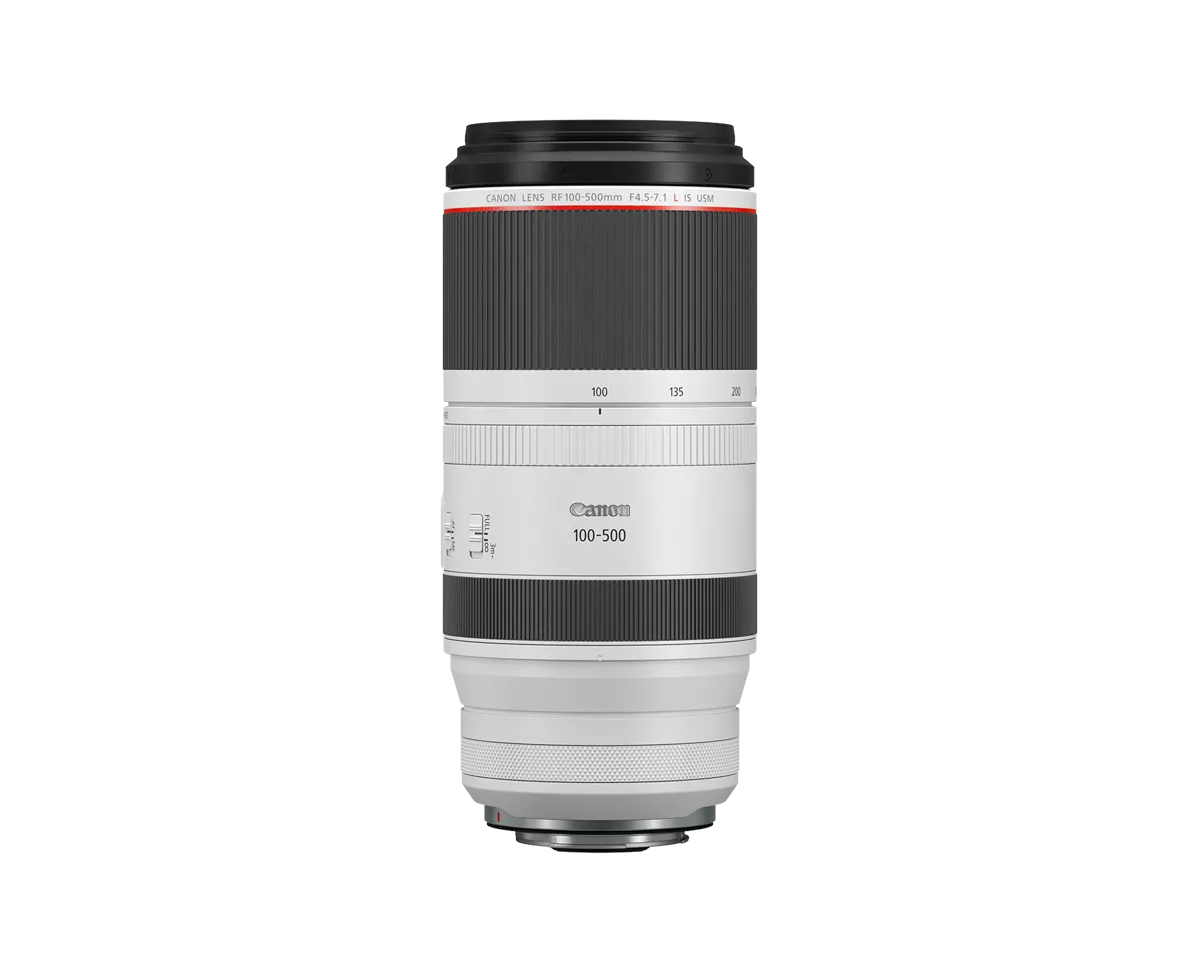
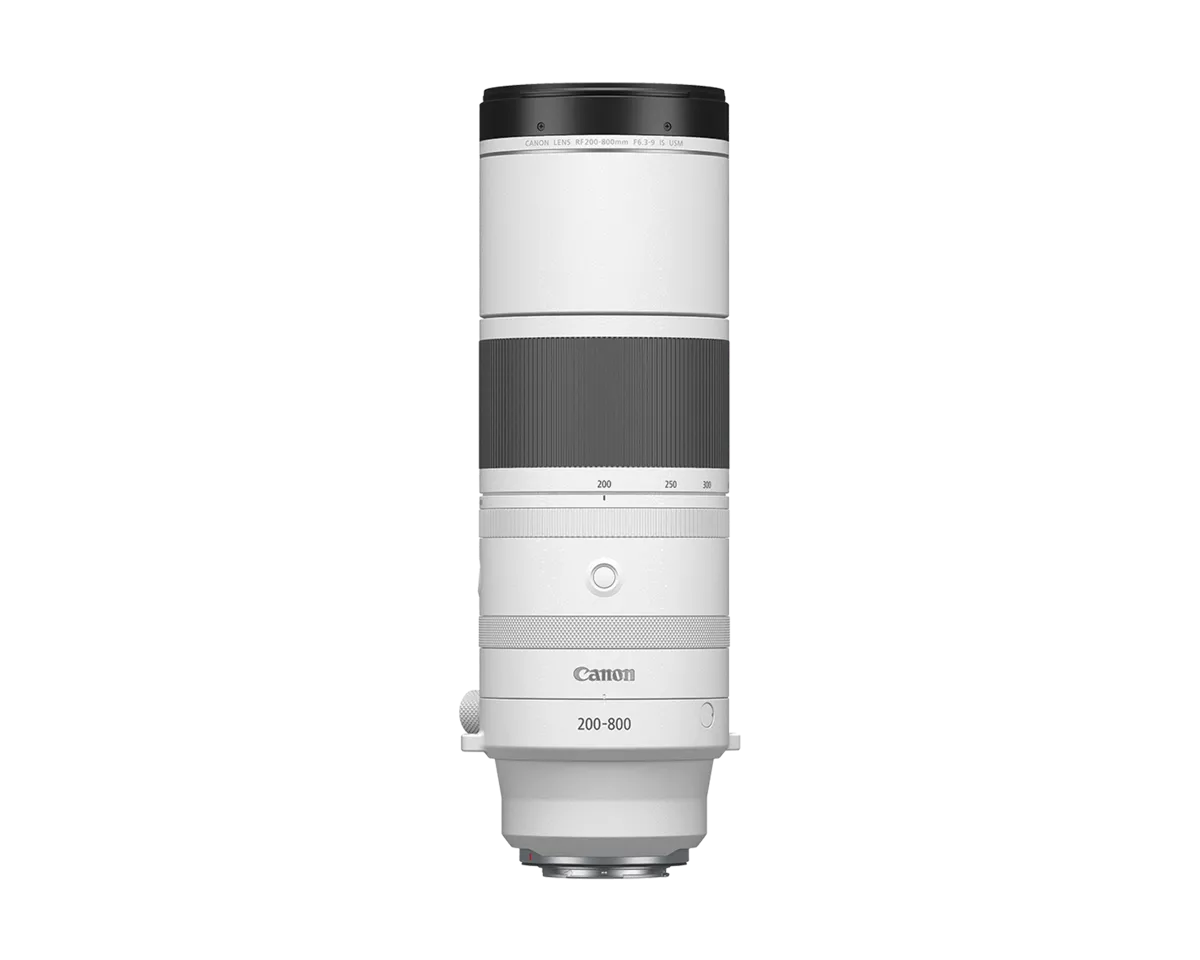
Pick the RF200-800 for distant birds; pick the RF100-500 when range, weight and framing flexibility matter more
The RF200-800 reaches 800mm and accepts Canon’s 1.4x and 2x extenders throughout its zoom range, making it the more direct tool for small, distant wildlife in good light. The RF100-500 starts at 100mm, has a lower published weight (1,365g without its tripod mount versus about 2,060g), and is the more versatile carry lens for a mix of wildlife, travel and closer subjects. It is also an L-series lens with a brighter maximum aperture at its own long end. Neither choice removes the need to match shutter speed and light to moving birds. I have not tested either lens.
This is a buying guide based on Canon’s published specifications and product pages, not a hands-on comparison. I use a Canon EOS R6 Mark II and EF lenses, but I have not tested these two RF super-telephotos. Canon’s stabilization figures are laboratory ratings and do not guarantee sharp results with every subject, shutter speed or camera body.
As an Amazon Associate I earn from qualifying purchases.
| Factor | RF100-500mm F4.5-7.1 L IS USM | RF200-800mm F6.3-9 IS USM |
|---|---|---|
| Focal range | 100–500mm | 200–800mm |
| Maximum aperture | f/4.5 at 100mm; f/7.1 at 500mm | f/6.3 at 200mm; f/9 at 800mm |
| Lens IS rating | Up to 5 stops | Up to 5.5 stops |
| Weight | 1,365g without tripod mount | About 2,060g |
| Filter size | 77mm | 95mm |
| Canon RF extenders | RF1.4x and RF2x; zoom position limited to 300–500mm | RF1.4x and RF2x supported across the zoom range |
| Construction | L-series; dust- and weather-resistant | Dust- and weather-resistant |
For small birds at long distances, the 200-800mm reach is the point
The 200-800mm lens keeps distant birds larger in the frame without first adding an extender. Its 200mm wide end is still useful when a subject moves closer, but it does not offer the 100–199mm range of the RF100-500. That shorter view can matter for larger animals, nearby subjects, landscape context or a fast change in framing.
On an APS-C EOS R body, Canon says the RF200-800 gives a field of view similar to 320–1,280mm on full frame; the RF100-500 corresponds to about 160–800mm. This changes angle of view, not the lens’s actual focal length. Check the exact camera format and how you want to frame before treating the longer equivalent number as an automatic win.
Compare the weight of the complete kit
Canon USA lists the RF100-500 at 1,365g without its tripod mount, plus about 160g for the mount, and the RF200-800 at about 2,060g. Subtracting the headline figures gives 695g, but that leaves the 100-500 mount out. Adding its mount gives about 1,525g and narrows the difference to about 535g. These are calculations from published specifications, not weighed test samples. Compare the camera, mount, hood and strap you will actually carry.
Both lenses have optical stabilization and weather-resistant construction. Canon rates the 100-500 at up to 5 stops and the 200-800 at up to 5.5 stops. Those figures describe correction for camera movement under test conditions. Stabilization does not freeze a bird in flight, so shutter speed and available light still matter.
The extender detail that is easy to miss
Canon lists the RF1.4x and RF2x extenders as compatible with both lenses. With the RF100-500, Canon restricts the zoom position to 300–500mm while an extender is attached. The RF200-800 supports the extenders at all of its zoom positions. That makes the 200-800’s extender setup simpler, while the 100-500 still offers a lighter base lens and a broader unextended range.
An extender costs light and changes handling as well as focal length. Compare the complete setup, including the exact converter, camera body, autofocus use and the aperture you are willing to work with. Do not compare an extended 100-500 to an unextended 200-800 as if the two kits were identical.
Which one fits your wildlife photography?
Choose the RF200-800 if birds are often distant, 600–800mm framing is a recurring need, and you are comfortable carrying a roughly 2kg lens. It is also the more straightforward extender platform across its zoom range. Expect f/9 at 800mm and plan around bright conditions, a suitable shutter speed and the body’s high-ISO performance.
Choose the RF100-500 if you want one lens for closer wildlife and distant subjects, value the 100mm wide end, or carry your kit for long stretches. Its published weight excludes the tripod mount; see the complete-kit calculation above. It reaches f/7.1 at 500mm. If you repeatedly crop beyond 500mm, compare that real need with the 200-800 before paying for the L-series flexibility.
If you are unsure, rent or borrow each lens on the body you own and photograph the subjects you actually pursue. Compare framing, keeper rate, autofocus behavior and fatigue after a real outing. I have not field-tested either model, so this guide does not claim a winner from personal image samples.
Sources and further reading
This guide uses the following manufacturer references and primary sources.
- Canon RF100-500mm F4.5-7.1 L IS USM: specifications and product details
- Canon RF200-800mm F6.3-9 IS USM: specifications and product details
- Canon RF Extender RF1.4x: compatibility information
- Canon RF Extender RF2x: compatibility information
- Canon USA RF200-800 support: detailed technical specifications
Common questions
Is the Canon RF200-800 better than the RF100-500 for bird photography?
The 200-800 reaches 800mm without an extender and may suit small, distant birds. The 100-500 starts wider and weighs less. Subject distance, light, camera format, portability and your framing needs decide which fits better.
How much heavier is the RF200-800 than the RF100-500?
Canon USA lists the RF100-500 at 1,365g without its tripod mount and about 160g for that mount; the RF200-800 is about 2,060g. The headline difference is 695g, or about 535g after adding the 100-500 mount. These are specification calculations, not measured complete kits.
Can I use a Canon RF extender on both lenses?
Canon lists the RF1.4x and RF2x extenders as compatible with both lenses. On the RF100-500, the zoom position is limited to 300–500mm with an extender attached; the RF200-800 supports the extenders across its zoom range.
Does image stabilization freeze birds in flight?
No. Optical stabilization helps reduce camera shake. A moving bird still needs a shutter speed fast enough for its movement.
Are the photos in this guide from hands-on testing?
No. The images are official Canon manufacturer product photos. This is a comparison of published specifications; neither lens was hands-on tested for this guide.
As an Amazon Associate I earn from qualifying purchases.